

A great UGC ad rarely happens by accident. The creator sounds natural because the hook, pacing, and call to action were planned before the camera turned on. The formula behind a high-converting UGC ad is a four-part script structure: hook, problem, solution, and CTA, each timed to a specific second count and written to sound like a real person talking. This structure works because it matches how attention actually moves through a short video: earn it, make it relevant, prove the product works, then tell the viewer exactly what to do next.
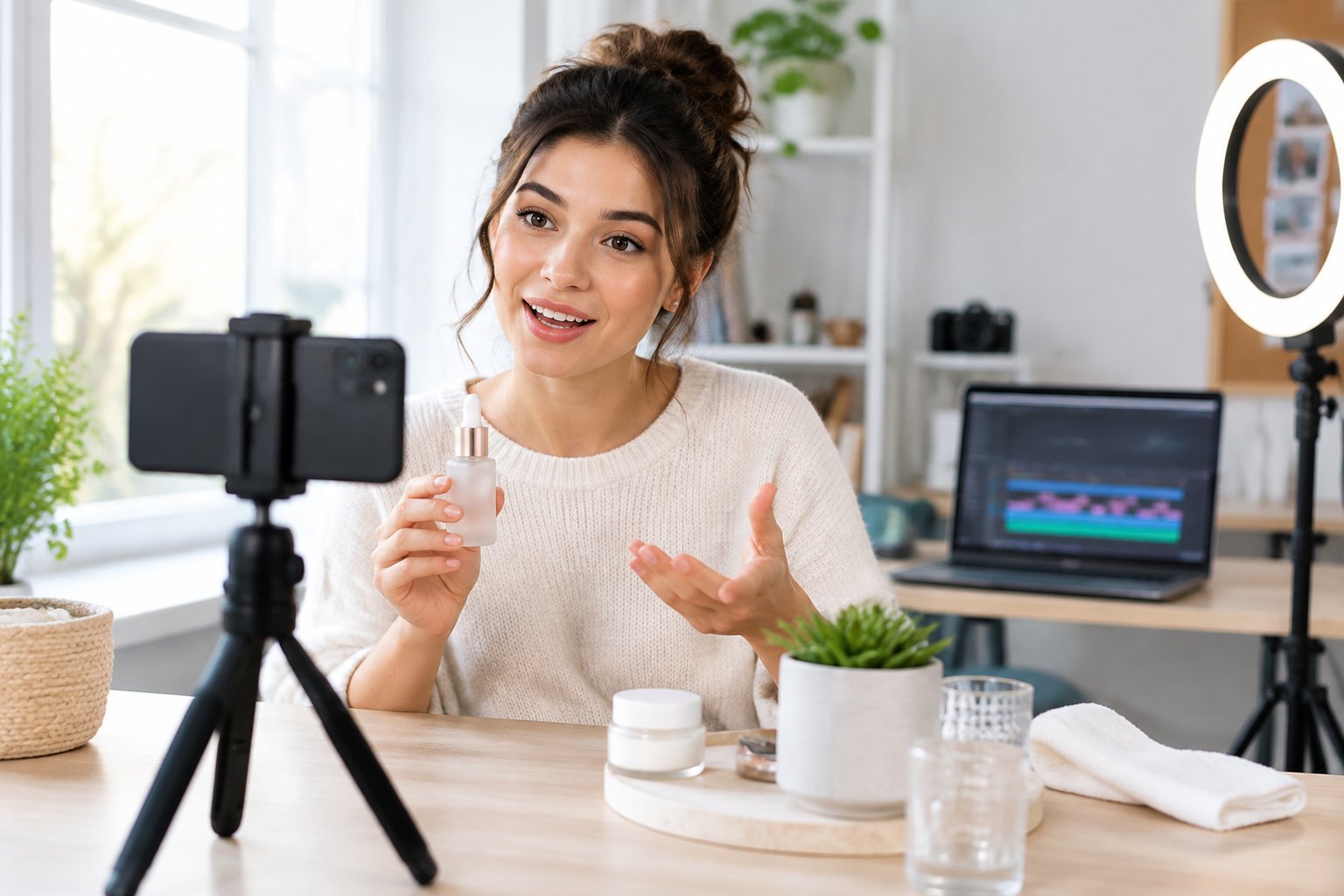
Brands that treat user-generated content ads as a creative gamble tend to get inconsistent results from their paid media. Brands that script deliberately, test hooks against each other, and keep the pacing tight tend to find winners faster and spend less money finding them. The rest of this guide breaks the formula into pieces you can apply to your next shoot or brief.
What Goes Into a Conversion-Focused UGC Script?
A UGC script needs four parts, each with one job: the hook earns attention, the problem creates relevance, the solution proves the product works, and the CTA tells the viewer what to do next. This UGC script structure applies whether the final cut runs 15 seconds or 45, and it works across skincare, supplements, home goods, and most other direct-to-consumer categories.
Give Each Beat a Job: Hook, Problem, Solution, and CTA
Each beat should do exactly one thing and hand off cleanly to the next. The hook stops the scroll in the first three seconds. The problem names a frustration the viewer already has. The solution shows the product solving it, with a visual proof point attached to every claim. The CTA states one clear action. Scripts that blur these jobs, like a hook that also tries to explain the product, tend to lose viewers before the message lands.
A Copy-and-Paste Script With Spoken Lines and Visual Cues
A usable UGC ad script writes out the spoken line and the visual cue side by side, so a creator knows what to say and what to show at the same time. A simple format looks like this:
- [0-3s] Hook: “I almost returned this three times before it actually worked.” / Visual: creator holds up the product, slightly annoyed expression.
- [3-8s] Problem: “My skin was so dry nothing I tried helped.” / Visual: close-up of dry patches, creator shrugging.
- [8-15s] Solution: “Then I started using this every night.” / Visual: product application, texture shot.
- [15-20s] CTA: “Tap below to check it out.” / Visual: product on screen with on-screen text matching the line.
Writing it this way keeps the creator’s delivery natural while making sure every required beat gets filmed.
Adapt the Same Message Into 15- and 30-Second Versions
The same core message can run as a 15-second cut for TikTok feed placements or a 30-second cut for Meta, just by trimming or expanding the problem and solution beats. The hook and CTA usually stay fixed length across both versions since they carry the most weight per second. A good habit: write the 30-second version first, then mark which problem or demo lines could be cut for the 15-second edit without losing the claim-to-proof pairing. For more on matching video length to platform, see our guidance on tips for Amazon product video optimization.

How Do You Write a Hook That Earns Attention?
A strong hook names a specific problem, promises a payoff, or opens a curiosity loop within the first three seconds, because that’s the window where most viewers decide whether to keep watching. Hooks that lean on a generic greeting or a slow product reveal lose viewers before the message starts. The goal is a line that could only belong to this product, not a line that could open any ad in the category.
Hook Formulas for Specific Problems, Curiosity, and Objections
Four hook types cover most situations. A problem-callout hook names the frustration directly (“My hair was falling out in clumps”). A payoff hook promises a result (“This cut my breakouts in two weeks”). A myth-bust hook challenges a common belief (“Stop wasting money on serums that do nothing”).
An objection hook addresses doubt head-on (“I almost returned this until day four”). Each formula fits a different audience temperature: cold audiences respond well to problem-callout and myth-bust hooks, while warmer or retargeted audiences respond to objection hooks that answer hesitation directly. Our breakdown of speaking to your ideal customer covers how to match hook language to where the audience sits in the funnel.
Learn how to Grow Fast and Manage with Ease
Pair the Opening Line With a Visual Pattern Interrupt
The spoken hook needs a visual that matches its energy, since a flat shot under a strong line wastes the hook’s power. A pattern interrupt, like a sudden close-up, an unexpected location, or a surprised facial expression, keeps the eye engaged while the ear catches the opening line. This pairing matters more on platforms where video autoplays silently first; our 3-second rule for scroll-stopping content explains how visual and audio hooks work together in that window.
Write Three Openers That Lead Naturally Into the Same Body
Filming three hook variants per concept, all leading into the same problem-solution-CTA body, lets a single shoot generate multiple testable ads. This works because the hook is usually the highest-leverage variable in an ad’s performance, so testing it in isolation gives a clear read without reshooting the whole script.

How Should You Pace the Problem, Demo, and Proof?
The problem, demo, and proof beats need to move fast and stack evidence as they go, because a UGC ad that lingers on any one beat starts to feel like a sales pitch instead of a story. Pacing is what separates an ad that feels native to the platform from one that feels like an obvious commercial.
Name One Customer Frustration Without Delaying the Product
The problem beat should name one specific frustration in plain language the viewer recognizes, then move on within a few seconds. Spending too long agitating the problem before showing the product risks losing viewers who already feel understood and are waiting for the payoff. One sharp line often does more work than a drawn-out explanation.
Show One Supported Benefit Instead of Listing Features
The solution beat works best around one clear, supported benefit shown in action rather than a list of product features read off a spec sheet. Viewers trust what they see more than what they’re told, so a single demonstrated benefit, paired with a visual that proves it, carries more weight than four claims with no proof attached. Our piece on leveraging consumer psychology to create converting listings covers why demonstrated benefits outperform feature lists in buyer decision-making.
Use Demonstrations and Genuine Social Proof to Build Trust
Real demonstrations, paired with genuine social proof like a testimonial line or a specific result, turn interest into belief faster than narration alone. UGC creators who show texture, application, or a believable before-and-after give the viewer something concrete to react to. A quick review mention or a number tied to a real outcome works best when it stays specific; our testimonial template offers a starting structure for writing these lines so they sound credible instead of scripted.
Keep Momentum With Natural Delivery, Captions, and Purposeful Cuts
Every cut in a UGC video ad should move the story forward, and burned-in captions keep the message intact for the large share of viewers watching on mute. Dead air, long pauses, or a cut that doesn’t add new information gives the viewer a reason to swipe away. Natural, slightly imperfect delivery from the creator tends to outperform an overly polished read, since it matches the native content the viewer expects in their feed.
What Makes a UGC Call to Action Clear and Credible?
A clear UGC CTA names exactly one next step and matches that step across the spoken line, the on-screen text, and the platform’s ad button. A CTA that asks for two actions, or one that doesn’t match the landing destination, confuses the viewer at the exact moment they were ready to act.
Choose One Next Step That Fits the Campaign Goal
The CTA should reflect the actual campaign goal, whether that’s driving traffic to a product page, prompting a sign-up, or encouraging research before purchase. Phrases like “tap to see the details” work for product-page traffic, while “review the plan and start when you’re ready” suits a sign-up flow. Picking one action and sticking with it across the whole ad keeps the message focused.
Match the Spoken CTA, On-Screen Prompt, and Ad Button
The words the creator says, the text on screen, and the button on the ad unit should all point to the same action. A mismatch, like a spoken “shop now” paired with a “learn more” button, creates friction right before the click. Checking this alignment before launch is a quick step that prevents an otherwise strong ad from underperforming on CTR.
Carry the Ad’s Promise Through to the Product Page
Whatever claim or offer the ad makes needs to show up on the landing page the viewer lands on, since a disconnect between the ad and the page breaks the trust the UGC built over the previous fifteen seconds. If the ad mentions a specific benefit or use case, the product page should confirm it quickly near the top. Our guide to crafting persuasive copy that sells on Amazon covers how to keep listing copy consistent with the promises made in paid ads.
How Do You Produce and Test Useful Script Variations?
Useful script variations come from changing one element at a time, usually the hook first, while holding the rest of the ad steady so the data stays readable. Producing a handful of untested scripts and hoping one performs wastes both production budget and ad spend; a structured testing approach finds winners faster.
Adapt Delivery and Framing for Meta, TikTok, and YouTube Shorts
The same script can run across Meta, TikTok, and YouTube Shorts, but delivery and framing should shift slightly for each. TikTok favors a faster, more casual read with trend-aware visual cues, while Meta placements can support a slightly more polished delivery without losing the native feel. Our guide on how to create TikTok ad creatives that convert covers platform-specific pacing and framing choices in more depth.
Test Hooks Before Changing the Body or Offer
Isolating the hook as the first test variable gives the clearest signal, since it’s the highest-leverage part of the ad and the easiest to swap without reshooting. Changing the body, offer, and hook all at once makes it hard to know what actually moved the result. A disciplined testing sequence tests hooks first, then moves to CTA or offer changes once a winning hook is found.
Read Hook Rate, CTR, and Conversion Results Together
Hook rate shows how many viewers kept watching past the first few seconds, CTR shows how many clicked, and conversion rate shows how many bought. Reading these three together tells a clearer story than any one metric alone: a high hook rate with low CTR usually points to a weak CTA or mismatched body, while low hook rate points back to the opening line itself. Our 6R framework for scaling ads walks through how to read these signals together when deciding what to scale.
Use AI-Assisted Variants With Human Review, Rights, and Disclosure Checks
AI UGC tools can generate script and voice variants quickly, but every variant needs a human review pass for accuracy, usage rights, and required disclosure before it runs as a paid ad. Skipping this step risks running an ad with an unsupported claim or a missing disclosure label. Our article on how to disclose AI-generated ads and why it matters covers the specific steps that keep AI-assisted creative compliant across platforms.
Turn One Clear Product Promise Into a Repeatable Ad
The UGC formula comes down to one clear promise, delivered through a hook that earns attention, a problem that creates relevance, a demonstrated solution, and a CTA that matches the landing page. Scripts built this way are easier to test, easier to adapt across platforms, and easier to scale once a version proves itself. The brands that treat UGC script creative testing as an ongoing system, not a one-time shoot, are the ones that keep finding fresh winners as old ads wear out.
If your team is ready to put this structure to work, Signalytics can help turn a single product concept into a full set of tested UGC ad scripts and creative variations, built around the hook, problem, solution, and CTA format that keeps performing across Amazon and paid social. Visit signalytics.ai or call (626) 509-0006 to talk through a script and creative plan for your next campaign.
Frequently Asked Questions
How long should a UGC ad script be?
Most UGC ad scripts run 15 to 30 seconds, with the hook taking the first three seconds and the CTA landing in the final five. Shorter cuts suit TikTok feed placements, while 30-second versions give Meta and YouTube Shorts more room for the problem and demo beats.
What makes a good Facebook ad hook for a product?
A good Facebook ad hook names a specific problem, promises a clear payoff, or challenges a common assumption within the first three seconds. It pairs a strong spoken line with a visual that matches its energy, since Facebook viewers decide whether to keep watching almost immediately.
Can the same UGC script work on Meta and TikTok?
The same script structure works on both platforms, but delivery and pacing should adjust slightly for each. TikTok favors faster, more casual delivery, while Meta placements can support a slightly more polished read without losing the UGC feel.
Why does my UGC ad get views but few clicks or sales?
High views with low clicks usually points to a weak or mismatched CTA, or a solution beat that makes claims without visual proof. Checking that the spoken CTA, on-screen text, and ad button all point to the same action is a quick first fix.
Can AI-generated UGC use first-person customer testimonials?
AI-generated UGC can present first-person language, but it needs clear disclosure when the content isn’t from an actual customer, along with a human review pass for accuracy and rights. Running an AI-assisted testimonial without proper disclosure risks policy violations on most ad platforms.