
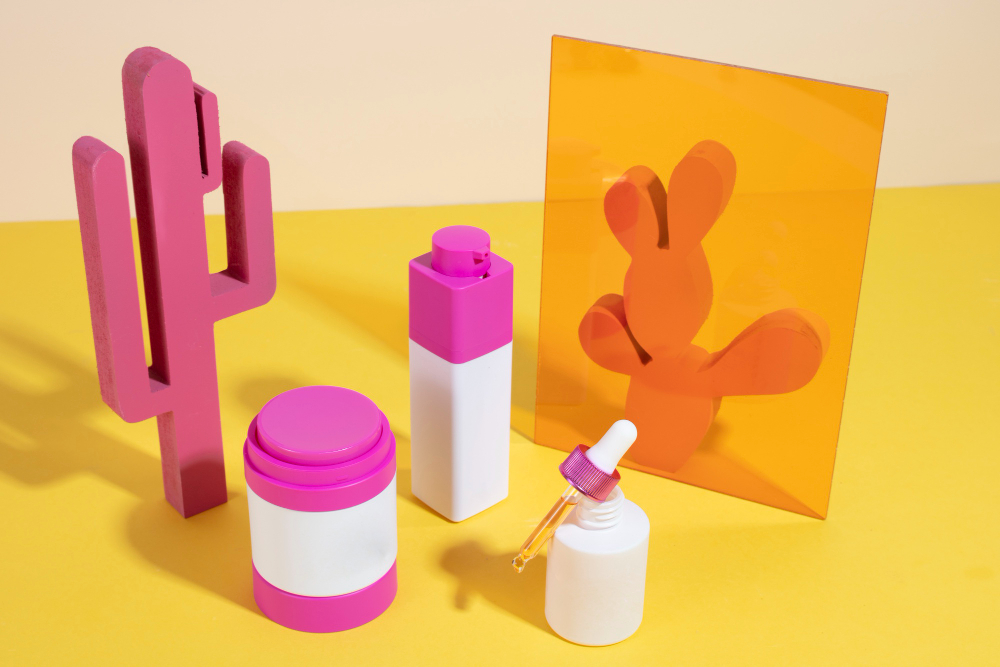
A shopper scrolling an Amazon listing decides whether to click in under two seconds, and a flat photo rarely earns that click when a competitor shows the product spinning, exploded into parts, or sitting inside a lifestyle scene. 3D product design for ads gives brands that edge by building a digital version of the product once, then reusing it across listing images, A+ content, video, and paid creative. At Signalytics, our creative team works with 3D assets as part of a broader approach to product marketing, because the strongest ad creative starts with a model that looks accurate before a single light or camera angle gets added.
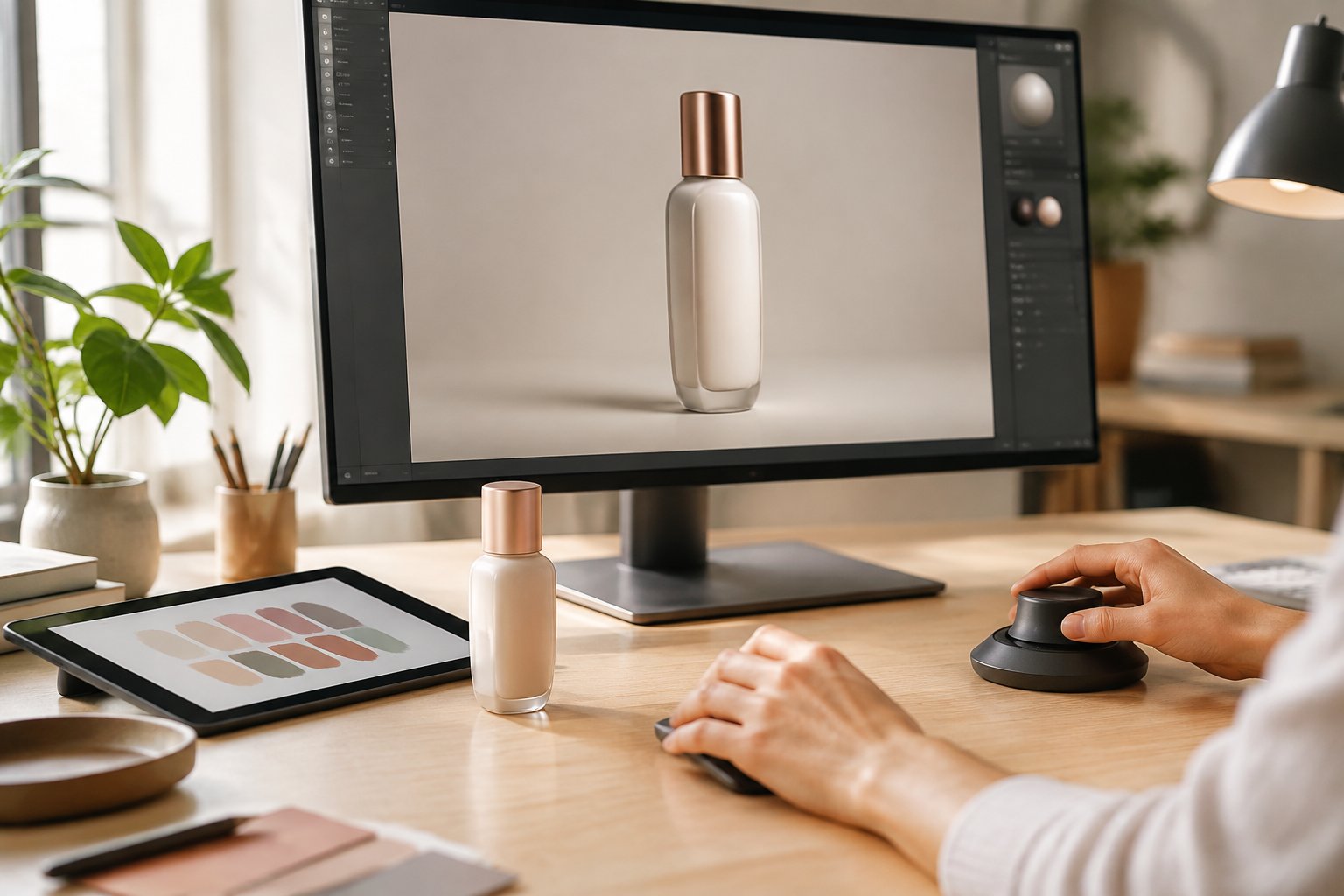
A beginner builds effective 3D ad creative by starting with an accurate product model, then layering materials, lighting, and camera work before exporting for the specific ad format. Skipping any one of those steps shows up in the final image as a product that looks slightly off, and shoppers notice even when they can’t name what feels wrong. The rest of this guide walks through what each stage involves and how to judge whether the result is ready for an Amazon listing or ad campaign.
3D Product Design for Ads: What Are You Creating?
A 3D model, a render, and an animation are three different outputs built from the same underlying asset, and knowing which one a project needs saves time and budget. The model is the digital object itself; the render is a still image generated from that model; the animation shows the model moving over time. Each serves a different spot in an ad campaign, from a static listing photo to a video that stops a scroll on social media.
How Are 3D Models, Renders, and Animations Different?
A 3D model is the base file, built with geometry that defines the product’s shape and proportions. Rendering takes that model and generates a photorealistic image by applying materials, lighting, and a camera angle. Animation adds motion to the model over time, whether that’s a slow rotation or an exploded view showing internal parts, and it depends on the model existing first since there’s no animation without something to animate.
When Does a Product Ad Benefit from 3D Creative?
3D creative pays off when a product’s shape, texture, or function is hard to capture with a camera alone. Complex products with moving parts, products that don’t exist yet as physical samples, and items sold in many colorways all benefit from one model producing multiple ad variations. A bottle, a piece of electronics, or a kitchen gadget with a mechanism to show off are common candidates, especially when the same visualization needs to appear on a product listing, in A+ content, and in a video ad without separate photo shoots for each.
How Do You Build an Ad-Ready Product Model?
Building a model for ads follows a sequence: gather accurate reference material, choose a modeling method that fits the product’s shape, apply materials and lighting, then check the result against the real item. Skipping the reference stage is the most common reason a render looks subtly wrong to shoppers who already know the product.
Gather Product Dimensions, Photos, and Brand References
Start with exact measurements, multiple angle photos, and any existing CAD files before opening modeling software. A 2D sketch or set of technical drawings gives a modeler the shape data that photos alone can’t provide, and brand color references keep the final render consistent with existing packaging. Missing a dimension here means guessing later, and guesses tend to show up as proportions that feel off once the model sits next to the real product.
Choose a Modeling Approach for the Product’s Shape
The modeling technique should match the product’s geometry. Computer-aided design (CAD) software suits products with precise mechanical parts and straight-edged forms, using operations like extrude, revolve, sweep, and loft to build shapes from 2D profiles. Products with complex curves, like a cosmetics bottle or a soft-goods item, often call for digital sculpting or surface modeling, since parametric modeling can struggle with organic forms that don’t reduce easily to simple operations.
Add Materials, Lighting, and Camera Angles
Materials and lighting turn a gray model into something that looks like the actual product on a shelf. Metal needs reflectivity settings, glass needs transparency and refraction, and fabric needs texture detail, each requiring different render settings to look convincing. Lighting setups that mimic a studio photo shoot, paired with a camera angle that matches how the product will be framed on the listing, bring the render closer to what a shopper expects to see.
Check the Render Against the Real Product
Before a render goes into any ad, compare it side by side with the physical product or detailed photos. Check proportions, color accuracy, and surface finish under the same kind of lighting a shopper would see in a photo. A render that looks great in isolation can still misrepresent the product if the color is a shade off or a texture reads as too smooth, and that gap tends to show up in product listing feedback or return rates later.
Which Tools and File Formats Fit the Creative Brief?
The right software and file format depend on whether a brand is starting from scratch or already has engineering files, and on where the final asset needs to end up. Beginners generally get the most mileage from free, well-documented tools, while existing CAD files from a manufacturer often skip the modeling step entirely.
When Should Beginners Use Modeling Software or Existing CAD Files?
Blender works well for beginners building a model from reference photos, since it’s free and widely documented, with render engines like Eevee for faster previews. Fusion 360 (Autodesk Fusion 360) suits products that need precise engineering accuracy, particularly items with mechanical parts or tight tolerances. If a manufacturer already has CAD software files for the product, those files save significant modeling time, though they usually need cleanup before they’re render-ready, since CAD geometry is built for manufacturing precision rather than smooth-shading visuals.
Which Files Should You Request for Renders and Interactive Assets?
Ask for OBJ or STL files for static renders, since both formats carry geometry without needing a specific software license to open. For interactive 3D experiences, like an Amazon 3D view or a web-based product viewer, GLB has become the standard format because it bundles geometry, materials, and textures into one file that loads efficiently in a browser. Older pipelines sometimes still use 3DS, though it’s less common in current ecommerce workflows.
How Much Model Detail Does Each Ad Format Need?
A still render for a listing photo can use a denser, more detailed model since there’s no file-size constraint on the final image. Interactive 3D on Amazon or a web page needs a lighter, optimized model so it loads quickly on mobile devices. Video animation sits in between, needing enough detail to hold up under a moving camera without the heavy geometry that an interactive viewer would choke on; render engines like Redshift handle this heavier geometry well for final video output.
How Do You Turn a 3D Model into Effective Amazon Creative?
A 3D model becomes effective ad creative when each output answers a specific question a shopper has, not when it’s simply converted into as many formats as possible. The same asset can produce a hero image, a set of A+ content modules, and a short video loop, but each one needs a clear purpose tied to where it appears in the shopping journey.
Match Each Visual to a Shopper Question
A still product rendering answers “what does this look like?” A 360-degree spin or interactive view answers “what does it look like from every angle?” Motion graphics or a short 3D animation can answer “how does this work?” by showing a mechanism in action or an exploded view of internal parts. Augmented reality takes this further by letting a shopper see the product at scale in their own space, which matters for furniture, home goods, and anything where size is hard to judge from a photo.
Adapt Renders for Listings, A+ Content, Video, and Ads
The same base model can be re-rendered for a white-background hero shot, a lifestyle scene for A+ content, and a looping animation for a video ad, without rebuilding the geometry each time. This reuse is a major part of what makes 3D creative cost-effective over a full campaign, since one modeling investment pays back across every format and every colorway variant. Brands updating an older listing often find that a refreshed set of renders, paired with stronger copy, moves conversion more than either change on its own.
Test Creative Alongside Listing and Advertising Performance
Treat new 3D creative as a test, not a guaranteed win. Compare click-through rate and conversion rate before and after swapping in 3D renders, and watch how the change interacts with ongoing PPC campaigns, since better creative often lowers the cost of driving traffic that already converts. A/B testing on listing images, where the platform allows it, gives a clearer read than judging a new render by eye alone.
Where Can AI Help Without Losing Creative Control?
AI tools speed up early concept work and production tasks in a 3D pipeline, but the final call on product accuracy and brand fit still needs a human reviewer. Treating AI output as a draft, not a finished asset, keeps the creative on-brand and technically correct.
Use AI to Explore Concepts and Support Production
AI-assisted 3D visualization can generate quick concept variations from a product photo or description, helping a team explore angles, color options, or scene ideas before committing to a full production render. This kind of early-stage prototyping shortens the time between an idea and something a brand can evaluate visually. AI can also assist with routine production tasks like background removal or basic visual effects work, freeing a human artist to focus on the details that need judgment.
Keep Human Review on Product Accuracy and Brand Fit
A human reviewer needs to check every AI-assisted output against the real product’s dimensions, materials, and brand guidelines before it ships in an ad. AI-generated geometry can drift from the actual product’s proportions in ways that aren’t obvious at a glance, and brand color accuracy matters enough on Amazon listings that it’s worth a dedicated review pass. At Signalytics, our in-house creative studio pairs AI-assisted production with human direction on every asset, so the speed of AI tools never comes at the cost of a render that misrepresents the product.
Build the Creative Around the Shopper’s Decision
The strongest 3D product design for ads starts with the question a shopper is actually asking, then builds the render, rendering style, or animation to answer it directly. A still image for a listing, an interactive view for size and detail, and a short animation for a mechanism each serve a different moment in that decision, and a single accurate model can produce all three without separate photo shoots. Getting there means gathering good reference material first, choosing a modeling approach that fits the product’s shape, and checking every render against the real thing before it goes live.
Brands that treat 3D creative as part of a coordinated listing optimization and advertising strategy, rather than a one-off asset, tend to get more mileage from the investment. Signalytics applies this same thinking across creative services and advertising management, treating product visualization as one part of a larger system built around conversion and ad efficiency.
Strong 3D creative works best when it’s paired with advertising and listing strategy built around the same shopper questions it answers. Signalytics’ AI-supported creative studio produces 3D renders, product animation, and video assets alongside human review for brand and product accuracy. See our AI creative services → [STUDIO_URL]
Frequently Asked Questions
Can I create 3D product ads without learning to model?
Yes, outsourcing to a creative studio or using AI-assisted tools lets a brand get 3D ad assets without building in-house modeling skills. A studio typically needs product dimensions, reference photos, and any existing CAD files to start, and can turn those into renders and animations without the brand learning the software directly. This is often faster than a beginner training up on modeling tools for a single campaign.
What is the difference between a 3D model and a product render?
A 3D model is the digital object itself, built from geometry that defines its shape and proportions. A product render is the final image generated from that model once materials, lighting, and a camera angle are applied. The model has to exist before any rendering can happen, since rendering is the output stage, not the construction stage.
Which product files should I give a creative team?
Share exact dimensions, multiple reference photos from different angles, and any existing CAD files from manufacturing. Brand color codes and any technical drawings showing internal mechanisms also help a modeler avoid guesswork. The more complete this reference set is, the less revision a render typically needs before it matches the real product.
Can AI generate accurate 3D product ads on its own?
AI tools can speed up early concept work and some production tasks, but human review still matters for checking a model’s accuracy against the real product. AI-generated geometry can drift from actual dimensions or brand colors without someone catching it. Pairing AI speed with a human check on accuracy and brand fit produces more reliable ad creative than relying on AI output alone.
How can I tell whether 3D creative is helping my Amazon ads?
Compare click-through rate and conversion rate on listings before and after introducing 3D renders or interactive views. Watch how advertising cost-per-click and overall ad spend efficiency shift once the new creative is live, since stronger visuals often make existing ad traffic convert at a higher rate. A/B testing on listing images, where available, gives a more direct read than judging the creative by appearance alone.