

If you run a business online, you have probably asked yourself whether SEO or PPC is the better choice for growing your digital marketing results. Both strategies can boost your online visibility, but they work in different ways and often serve different goals. The short answer is that SEO builds long-term organic traffic through search engine optimization, while PPC delivers fast, paid traffic through search engine marketing you control with a budget.
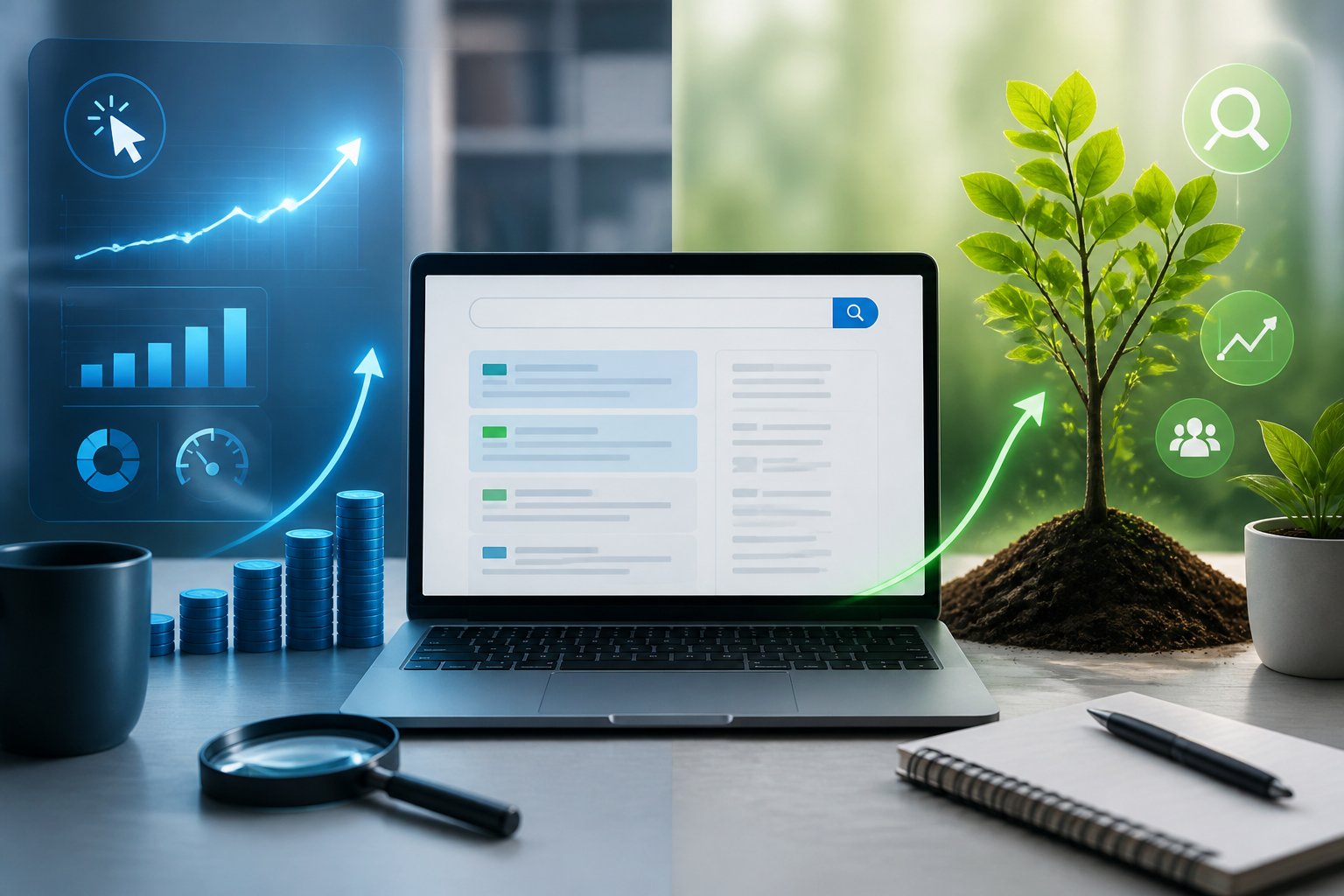
Your choice between these two paths depends on your timeline, budget, and what you need most right now. If you want steady growth in leads and conversions over time, SEO may fit your goals. If you need sales or traffic quickly, PPC can get you there faster, though the results stop once you stop paying.
This article breaks down how each approach works, what benefits and trade-offs you can expect, and how to decide which mix makes sense for your business. You will also find answers to common questions people ask when comparing SEO vs. PPC.
Key Takeaways
- SEO and PPC both aim to improve your online visibility, but they use different methods and timelines to get there.
- Organic search growth tends to build slowly and last longer, while paid campaigns can create quick demand but require ongoing investment.
- The right approach for your business depends on your budget, goals, and how quickly you need leads, sales, or conversions.
The Core Differences at a Glance
SEO and PPC both aim to get your website in front of people searching on Google, but they work in different ways. One earns your spot through relevance and quality, while the other pays for a guaranteed position.
Organic Results and Paid Search Results
When you search on Google, you see two types of listings on the search engine results pages, or SERPs. Organic results are the unpaid listings that rank based on relevance, content quality, and technical factors. SEO is the process of improving your website so it ranks higher in these organic results.
Paid ads, on the other hand, show up because a business paid for that placement. These are the result of PPC advertising, and you can usually spot them by a small “Ad” label.
Both types of results appear on the same page, but they earn their spot through completely different methods. Your organic traffic comes from search engines trusting your content. Your paid visibility comes from your ad budget.
Cost Structure, Timing, and Longevity
PPC and SEO also differ in how you pay and how fast you see results. With PPC, you pay each time someone clicks your ad. Stop paying, and your ad disappears immediately.
SEO works differently. You invest time and effort into improving your site, but you don’t pay for each visitor. This makes organic traffic more sustainable over time, though it takes longer to build.
Here’s a quick comparison:
| Factor | SEO | PPC |
|---|---|---|
| Payment | No cost per click | Cost per click |
| Speed | Slow to build | Immediate visibility |
| Results after stopping | Traffic can continue | Traffic stops right away |
SEO supports long-term growth, while PPC delivers fast but temporary results.
Control, Targeting, and Search Placement
PPC gives you more direct control over where and when your ads appear. You can choose specific keywords, set a budget, and target certain locations, devices, or times of day. You can also test different ad copy quickly to see what works.
SEO offers less direct control over placement. You can’t guarantee a specific ranking position, since Google’s algorithm decides that based on many factors. However, SEO lets you shape your site’s structure, content, and user experience in ways that support long-term visibility.
Both approaches let you target specific keywords, but PPC gives you faster adjustments. SEO requires more patience, since changes to your site take time to affect your rankings.
How AI-Powered SERPs Affect Visibility
Google’s search results now include AI-generated summaries at the top of many pages. These AI tools pull information directly from web content to answer user questions without requiring a click.
This shift affects both SEO and PPC. Organic listings may appear further down the page, which can reduce clicks even for well-ranked content. Paid ads still appear separately, but users may see the AI summary first and decide they don’t need to click anything.
For you, this means adapting your content to answer questions clearly and directly, since AI systems often pull from pages that explain topics in a straightforward way. Paid visibility remains a reliable option when organic clicks decrease due to these AI features.
How Organic Growth Works
Organic growth relies on four building blocks: understanding what your audience searches for, creating content that answers their questions, making sure search engines can crawl and rank your site, and earning trust from other sites and users. Each piece works together to improve your organic rankings over time.
Keyword Research and Search Intent
Keyword research is the starting point of any SEO strategy. You need to know which keywords your audience actually types into search engines before you write a single page of content.
Tools like Ahrefs can show you search volume, competition, and related terms. But finding keywords isn’t enough. You also need to understand search intent, which means figuring out why someone is searching for that term.
Someone searching “best running shoes” wants a comparison. Someone searching “buy Nike Pegasus 41” wants to make a purchase. Your content has to match that intent, or it won’t rank well or convert visitors into customers.
On-Page Content and Internal Linking
Once you know your keywords and intent, you can focus on on-page SEO. This includes writing high-quality content that thoroughly answers a searcher’s question, along with technical details like title tags and meta descriptions.
Your content should be:
- Clear and well-organized, using headings to break up sections
- Focused on one main topic per page, so search engines understand what it’s about
- Updated regularly, especially for evergreen content that stays relevant over time
Internal linking connects related pages on your site. This helps visitors find more information and helps search engines understand which pages matter most. A strong internal linking structure can improve organic visibility for pages that might otherwise get overlooked.
Technical Foundations for Search Rankings
Technical SEO makes sure search engines can actually find, crawl, and index your pages. Without this foundation, even the best content won’t show up in organic search results.
Site speed is one of the biggest factors here. Pages that load slowly frustrate visitors and can hurt your rankings. Google has confirmed that speed is a ranking factor, especially on mobile devices.
Structured data is another key piece. It’s code you add to your pages that helps search engines understand your content better. This can lead to rich results, like star ratings or FAQ dropdowns, which make your listing stand out.
Other technical basics include:
| Element | Why It Matters |
|---|---|
| Mobile-friendliness | Most searches happen on phones |
| Secure connection (HTTPS) | Builds trust and is a ranking signal |
| Clean URL structure | Helps both users and search engines |
| No broken links | Prevents poor user experience |
Authority Building Beyond Your Website
Off-page SEO focuses on what happens outside your website. This is where backlinks come in. When other reputable sites link to your content, it signals to search engines that your site is trustworthy.
Link building takes time and effort. You can earn backlinks by creating content worth referencing, reaching out to industry sites, or getting featured in press coverage.
Brand mentions also matter, even without a direct link. Search engines pick up on how often and how positively your brand is mentioned across the web.
Building expertise and brand authority isn’t instant. It happens gradually as more people reference, share, and trust your content. This is also why organic growth tends to hold steady even through algorithm changes, since a site with genuine authority and useful content has less to lose when rankings shift.
How Paid Campaigns Generate Demand
Paid advertising works by putting your business in front of people who are actively searching for what you offer. Your success depends on how well you bid for keywords, target the right audience, write clear ad copy, and manage your budget.
Google Ads Auctions, Bidding, and Quality Score
When you launch a PPC campaign on Google Ads, you enter an auction every time someone searches a keyword you’re bidding on. This auction decides which ads show up and in what order.
Your bid amount matters, but it’s not the only factor. Google also looks at your Quality Score, which is based on your ad’s relevance, your expected click-through rate, and your landing page experience.
A higher Quality Score can lower your cost per click (CPC) and improve your ad position. This means you don’t always need the highest bid to win a good spot in paid search results.
Understanding keyword bidding helps you control ad spend while staying competitive. You can set daily budgets and adjust bids based on performance data from past campaigns.
Audience Targeting and Campaign Formats
Precise targeting lets you show ads to the people most likely to buy from you. You can target your audience based on location, device, time of day, interests, and past behavior.
Google Ads offers different campaign formats to match your goals:
- Search ads – text ads that appear in search results when someone types a query
- Display ads – visual ads shown across websites in the Google Display Network
- Retargeting – ads shown to people who already visited your site but didn’t convert
Each format serves a different purpose in your PPC strategy. Search ads capture people ready to buy, while display ads and retargeting keep your brand visible to potential customers over time.
Ad Copy and Landing Page Alignment
Your ad copy needs to match what your landing page delivers. If your ad promises a discount but the landing page doesn’t mention it, visitors will likely leave without converting.
Strong ad creation starts with a clear message that speaks directly to your target audience. Use specific language that matches the search intent behind the keywords you’re bidding on.
Your landing pages should load quickly, be easy to navigate, and include a clear call to action. This alignment between ad copy and landing page content also affects your Quality Score, which can lower your CPC over time.
Testing different versions of your ads and landing pages helps you find what works best for your paid search campaigns.
Budget Management and Campaign Optimization
Managing your ad spend well means checking performance data often and adjusting bids or budgets based on results. You should track metrics like cost per click, conversion rate, and click-through rate to see what’s working.
Ad fatigue and ad blindness happen when people see the same ad too many times and start ignoring it. This can lower your campaign’s performance and increase your cost per click.
To avoid this, rotate your ad creative regularly and refresh your messaging. Reviewing your PPC campaigns weekly or monthly helps you catch problems early and reallocate budget toward the ads and keywords that perform best.
Benefits, Trade-Offs, and Performance Metrics

Both PPC and SEO offer real benefits, but they come with different trade-offs in speed, cost, and traffic quality. Knowing how to measure each one helps you decide where to put your budget.
Speed, Scalability, and Brand Reach
PPC gives you immediate visibility. Your ad can appear at the top of search results within hours of launching a campaign.
SEO works differently. You build organic traffic over months, not days.
Both approaches can grow your brand awareness, but in different ways. PPC puts your name in front of people right away, even if they don’t click.
SEO builds brand recognition more slowly. Over time, showing up consistently in search results makes your business feel more established.
PPC scales fast. You can increase your budget and reach more people almost instantly.
SEO scales through content and authority. Growth takes longer, but it tends to hold steady once you reach it.
Cost Efficiency and Return on Investment
PPC costs you money for every click. Your ad spend stops working the moment you stop paying.
This makes PPC a good fit for short campaigns or product launches. You get results fast, but you pay for each one.
SEO requires upfront investment in content and site work. But it doesn’t charge you per visitor.
Here’s how the costs typically compare:
| Factor | PPC | SEO |
|---|---|---|
| Cost structure | Pay per click | Upfront investment |
| Traffic cost over time | Stays constant | Decreases |
| Return on investment | Immediate but temporary | Slower but longer lasting |
Your return on investment with SEO tends to improve over time. Once you rank well, that traffic keeps coming without added cost.
Traffic Quality, Conversion Rates, and CRO
Traffic quality depends on intent. PPC lets you target specific keywords tied to buying behavior, which can lead to strong conversion rates.
SEO traffic often includes people at different stages of the buying process. Some are ready to purchase. Others are still researching.
Your click-through rate, or CTR, tells you how well your ad or listing captures attention. A high CTR doesn’t always mean a high conversion rate, though.
That’s where conversion rate optimization, or CRO, comes in. You can improve your landing pages to turn more visitors into customers, regardless of whether that traffic comes from ads or organic search.
Testing headlines, page layout, and calls to action can raise your conversions without spending more on traffic.
Measurement Through Analytics and Attribution
You need clear data to know what’s working. Analytics tools track clicks, conversions, and cost per result for both PPC and SEO.
PPC platforms give you direct numbers. You can see your ad spend, CTR, and conversions in real time.
SEO takes more work to measure. You’ll track organic traffic, keyword rankings, and conversion rates over weeks or months.
Attribution models help you understand which channel gets credit for a sale. A customer might click a PPC ad first, then convert later through organic search.
Without proper attribution, you might misjudge which strategy drives real results. Reviewing both channels together gives you a clearer picture of your return on investment and supports better decisions about long-term growth versus sustainable growth.
Choosing the Right Mix for Your Business Goals

Your budget, timeline, and industry all affect whether you should lean toward SEO, PPC, or a combination of both. The right digital marketing strategy depends on how fast you need results and how much competition exists in your market.
When Organic Investment Should Take Priority
If you’re building a brand for the long term, an SEO strategy should be your main focus. This works well for businesses with time to wait 6 to 12 months for results.
You should prioritize organic rankings if your goal is sustainable traffic without ongoing ad spend. SaaS companies, blogs, and service-based businesses often benefit most from this approach since their customers research before buying.
Investing in keyword research and SEO content early helps you build search rankings that keep bringing visitors for years. This also improves organic visibility, which builds trust with potential customers who skip paid ads.
When Paid Media Is the Better First Move
PPC strategy makes more sense when you need leads or sales right away. New websites with no search rankings yet can use paid advertising to get in front of customers immediately.
If you’re testing a new market or product, PPC gives you fast data on what works. You can adjust keywords, ad copy, and targeting within hours instead of waiting months.
Paid media also works well for time-sensitive offers or events. Since PPC and SEM let you control exactly who sees your ads, this method is ideal when you need predictable, quick results tied directly to your budget.
Using Both Channels for Product Launches and Promotions
Product launches often benefit from combining SEO and PPC at the same time. Paid ads can drive immediate traffic and sales while your SEO content slowly builds organic rankings in the background.
During a launch, you might use PPC to capture demand from people already searching for solutions like yours. At the same time, social media ads and retargeting can keep your brand in front of people who visited your site but didn’t convert.
This combined approach supports both short-term sales and long-term brand awareness. Once the promotion ends, your SEO content continues working, even after your ad spend stops.
Paid search isn’t the only paid channel worth testing this guide to advertising on social media covers Facebook, Instagram, and TikTok for ecommerce.
Turning PPC Data Into Stronger Organic Content
PPC data can guide your SEO efforts by showing which keywords actually drive conversions. Instead of guessing which topics matter to your audience, you can look at your paid search reports for proof.
If certain ad keywords have a high click-through rate and low cost per acquisition, those are strong candidates for organic content. This lets you build search rankings around terms you already know convert.
This process also improves your return on investment across both channels. By using real performance data instead of assumptions, you reduce guesswork in your SEO strategy and get more value from every dollar spent on paid advertising.
Get in touch for White Label PPC services
Cost and efficiency go hand in hand here’s a full breakdown of how much Amazon ads cost and what drives it.
Frequently Asked Questions
Both SEO and PPC bring traffic to your site, but they work in different ways and take different amounts of time to pay off. Here are answers to common questions that can help you decide how to use each one.
What is the difference between SEO and PPC advertising?
SEO focuses on earning traffic through unpaid search results. You do this by improving your site’s content, structure, and links so it ranks higher on Google.
PPC works differently. You pay each time someone clicks on your ad, and those ads show up at the top of search results right away.
With SEO, you build long-term visibility. With PPC, you buy your spot on the page.
Which strategy is better for generating leads: SEO or PPC?
This depends on your goals and your timeline. PPC often generates leads faster because your ads appear as soon as your campaign goes live.
SEO takes more time to build up, but it can bring in steady leads for months or years without ongoing ad spend. If you need leads right now, PPC is the faster option. If you’re building for the future, SEO tends to pay off more over time.
How do the costs of SEO compare with PPC advertising?
SEO costs come from time and effort spent creating content, fixing technical issues, and building links. You may hire a specialist, but you don’t pay for each visitor who lands on your page.
PPC costs work differently. You pay every time someone clicks your ad, and prices can rise quickly for competitive keywords.
Over time, SEO can lower your cost per visitor since you stop paying once you rank well. PPC costs stay ongoing as long as you want your ads to run.
How long does it take to see results from SEO versus PPC campaigns?
PPC can show results almost immediately. Once you launch a campaign, your ads can start appearing in search results within hours.
SEO takes longer. It often takes several months of consistent work before you notice higher rankings or more organic traffic.
If you need quick wins, PPC delivers faster. If you’re willing to wait, SEO can build lasting results.
Are PPC ads worth the investment for small businesses?
PPC can work well for small businesses that want quick visibility, especially when launching a new product or promotion. You control your budget and can adjust it based on performance.
That said, costs can add up fast in competitive industries. It helps to test small budgets first and track your return before scaling up your ad spend.
Costs vary by platform see this closer look at TikTok advertising pricing, including CPM, CPC, and minimum budgets.
Can SEO and PPC be used together in a digital marketing strategy?
Yes, many businesses use both strategies at the same time. PPC can give you quick visibility while your SEO efforts build up in the background.
You can also use PPC data, like which keywords convert well, to guide your SEO content strategy. Combining both approaches often leads to stronger overall search visibility than using just one.