
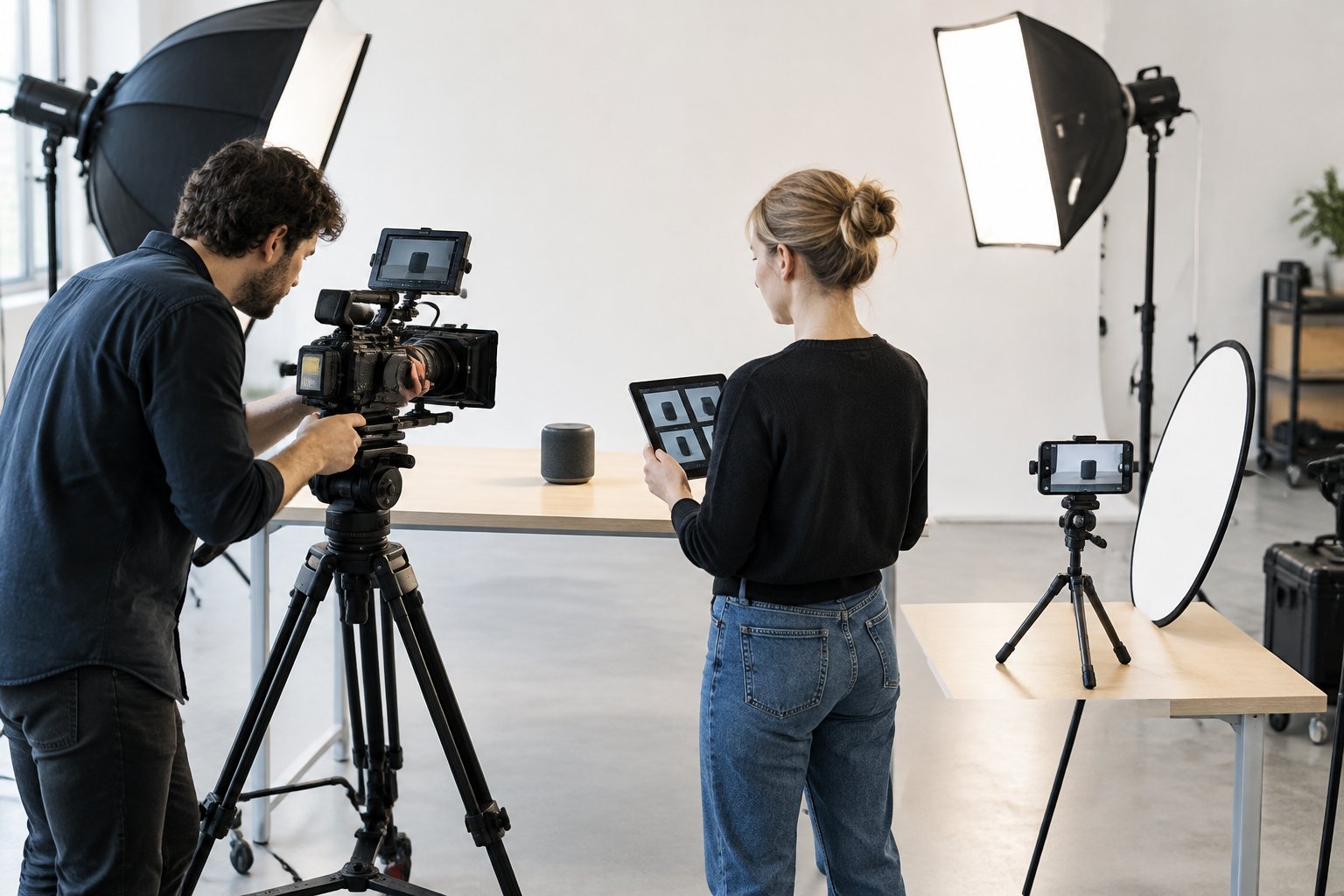
Brands shopping for video in 2026 face a real choice between two production paths that used to be one. For most ecommerce and performance marketing budgets, a hybrid approach wins: AI video handles the volume and speed, while traditional shoots capture the core footage AI still can’t fake. That answer sounds like a compromise, but the numbers back it up. A single AI-generated product clip can cost under $50 and arrive in a day, while a traditional 60-second commercial still runs $4,000 to $18,000 and takes two to six weeks once revisions are counted.
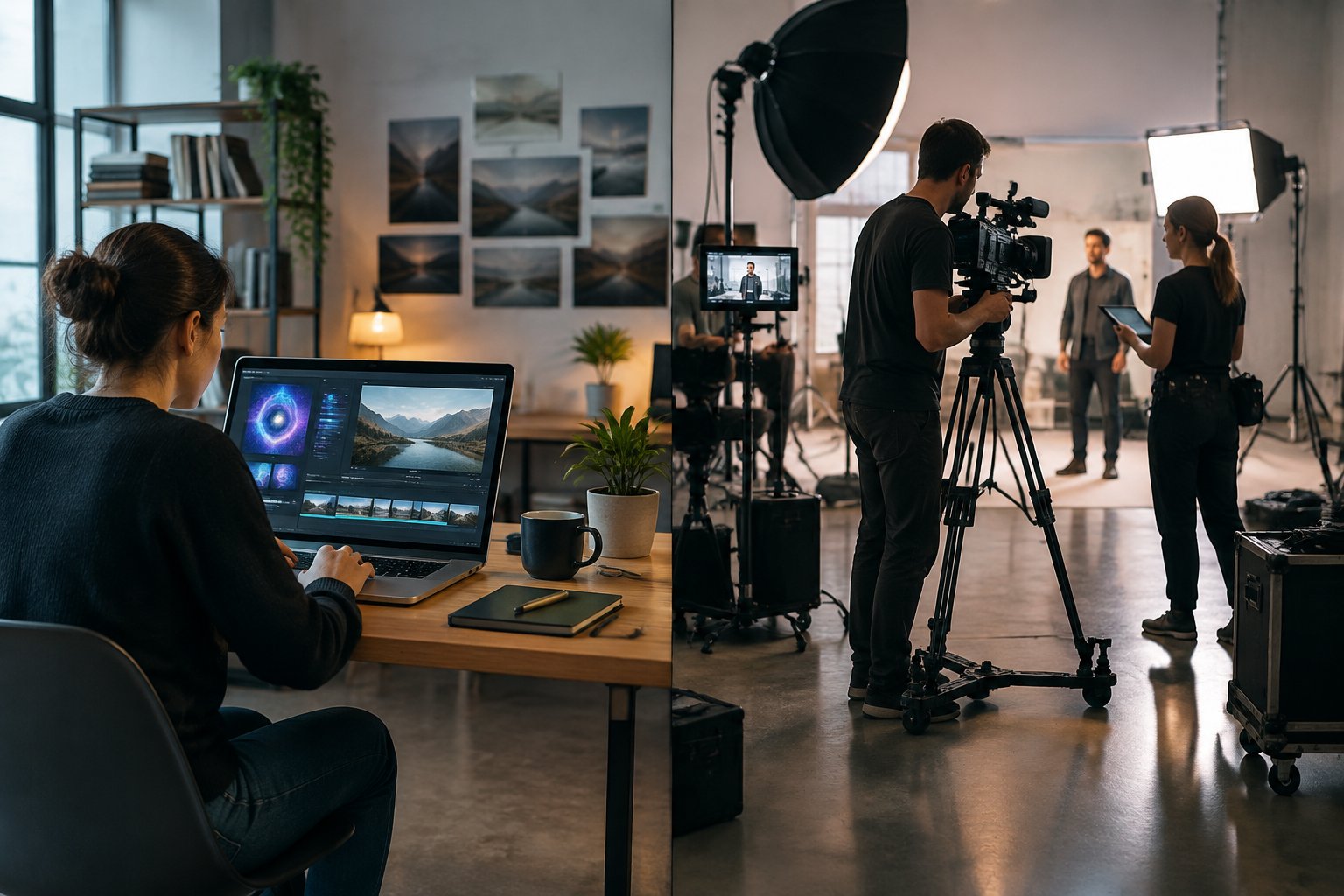
That cost and speed gap is why so many brands are rethinking their creative pipeline this year. The question isn’t whether AI video production belongs in your mix, it’s where it should sit next to traditional filming, and how to combine the two without losing product fidelity or brand trust. We work with Amazon and ecommerce brands on exactly this problem, building creative systems that pair real footage with AI-assisted scale for performance marketing. If you want a second opinion on your current setup, visiting signalytics.ai or calling (626) 509-0006 is a straightforward way to start that conversation.
Which Production Method Fits Your Goal?
AI video and traditional video production solve different problems, and the right pick depends on what the finished asset needs to do. AI video production suits high-volume, fast-turnaround content like social ads and product variations, while traditional video production fits projects that need real human performance, precise physical detail, or brand storytelling with emotional weight.
How Do AI and Traditional Workflows Differ?
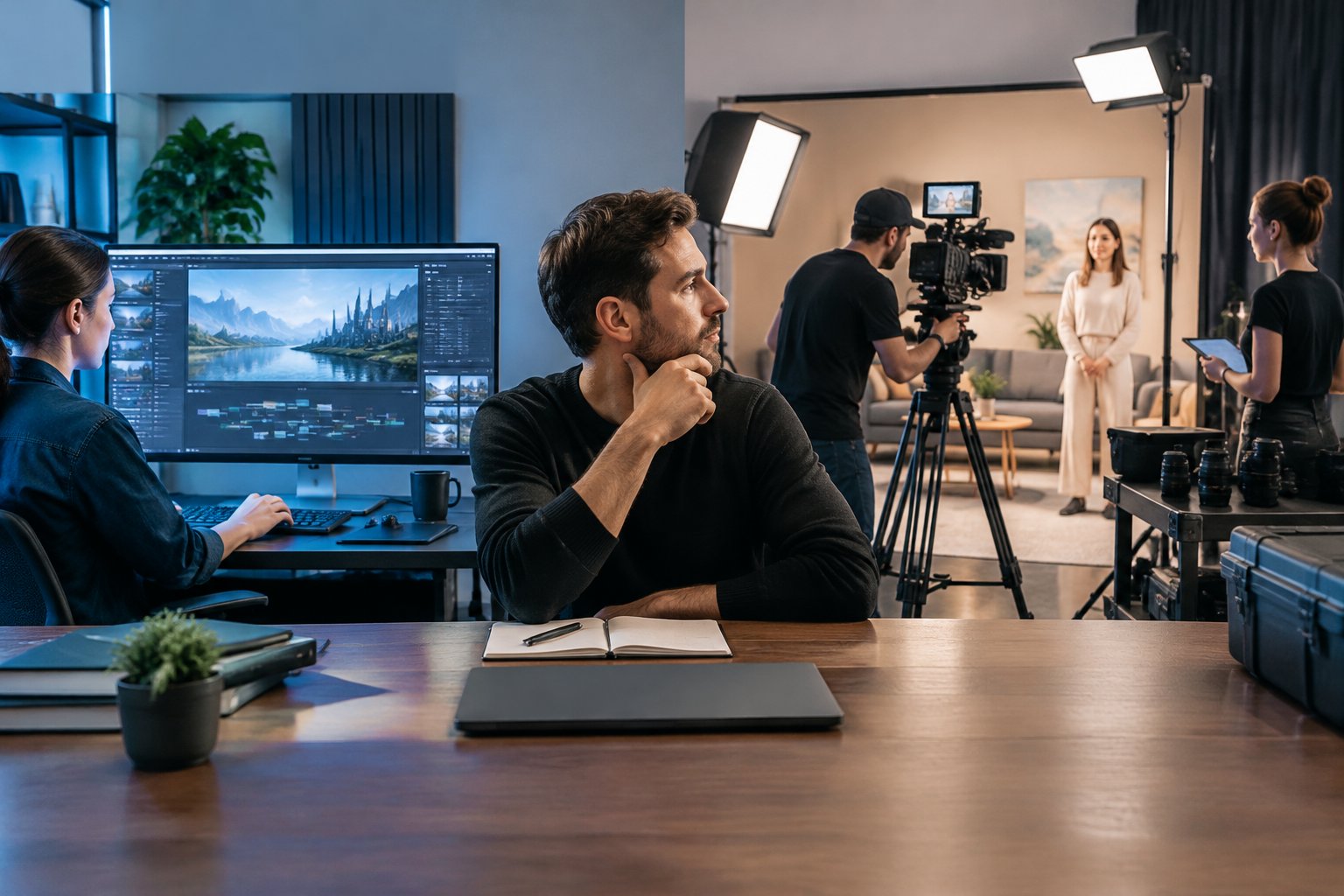
AI video production generates footage from text prompts, still images, or digital avatars instead of filming it with a camera crew. Text-to-video tools turn a written brief into motion; image-to-video tools animate a product photo into a short clip; avatar video tools use a digital presenter to deliver a script without a human on camera.
Traditional production still follows the three-phase model: pre-production (scripting, casting, location scouting), production (the actual shoot with crew and equipment), and post-production (editing, color, sound). Each phase adds time and cost, but it also adds the kind of control that comes from directing real people and real cameras on a real set.
The method you choose shapes your whole budget and timeline—our breakdown of AI video vs. traditional video production on cost, speed, and quality shows where each one wins and when a hybrid makes the most sense.
How Do Cost, Speed, Quality, and Control Compare?
The trade-offs break down clearly once you line them up side by side.
| Factor | AI Video Production | Traditional Production |
|---|---|---|
| Typical cost (60-sec video) | $170 – $700 all-in | $5,000 – $20,000 all-in |
| Typical timeline | 1 – 3 days | 2 – 6 weeks |
| Revision speed | Minutes, regenerate freely | Days, 15-25% of budget per round |
| Best for | Social ads, product variations, testing | Brand films, live action, dialogue-heavy spots |
| Weak spot | Generic aesthetic risk, product fidelity | Cost and speed at volume |
AI wins on cost, speed, and the sheer number of variations you can test. Traditional filming still wins when a brand needs tightly controlled physical detail or a human performance that carries the message.
If you’re weighing how far automation can take your visuals, our guide on whether AI can create 3D product models lays out what’s actually possible in 2026—and where a human 3D artist is still essential.
How Much Does Each Approach Really Cost?
A traditional 60-second product video runs $5,000 to $20,000 once hidden costs are counted, while a comparable AI-generated video typically lands between $170 and $700. The gap gets even wider at scale, since AI-generated video production cost per additional variation drops close to zero while traditional production costs climb with every reshoot.
What Drives Traditional Production Costs?
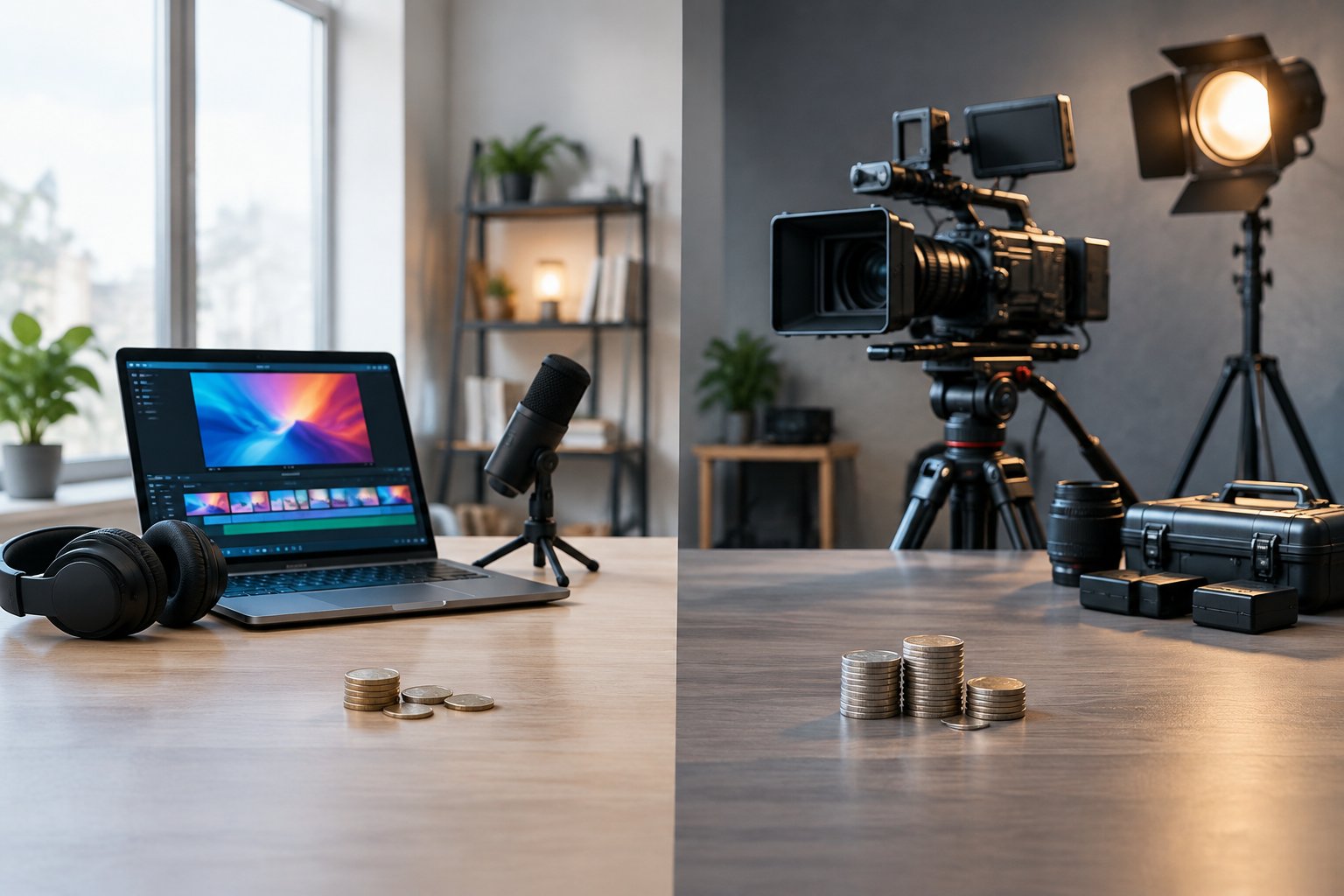
Labor and crew time make up the largest share of traditional production costs. Directors charge $800 to $3,500 per day, camera operators run $500 to $1,500 per day, and equipment rental adds another $1,000 to $4,000 on top. Studio or location rental costs $500 to $3,000 per day, and video editors bill $20 to $150 or more per hour depending on experience.
Revision cycles add a hidden layer. The industry average is 3.2 rounds of revisions per video, and each round costs 15% to 25% of the original editing budget. If a concept needs reshooting after testing poorly, that can cost 60% to 80% of the original production budget all over again.
What Does a Finished AI Video Cost Beyond Generation Fees?
Generation fees are the smallest part of an AI video’s real cost. Platform costs run $20 to $100 in generation fees for a typical 60-second video assembled from several clips, but human time for prompt writing, review, and light editing adds another $150 to $600. The honest all-in range for a finished AI video sits closer to $170 to $700, still a fraction of traditional costs but not the “free” number some vendors imply.
How Do You Compare Cost per Approved Creative Variation?
Cost per approved variation, not cost per video, is the number that matters for performance marketing. A brand testing 10 ad variants might spend $15,000 to $40,000 on a traditional shoot limited to three to five variants, or $300 to $1,200 generating 10 to 50 AI variants with near-zero marginal cost per additional version. Our ai ad creative how to scale creative testing approach applies this same logic when building out testing plans for Amazon and social ad campaigns.
How Fast Can You Get Campaign-Ready Videos?
AI video generation itself takes minutes, but a campaign-ready asset still needs review, formatting, and approval before it reaches social ads or performance ads. Traditional production timelines run 3 to 6 weeks from brief to delivery, while AI-assisted pipelines compress that same work into 1 to 5 days including revisions.
Why Is Generation Time Different From Delivery Time?
Generating a single AI clip can take seconds to a few minutes, but that’s rarely the finished product. Teams still need to review outputs, pick the best take, adjust prompts, and assemble clips with music and captions for social media content. A realistic estimate for a polished 60-second AI video, including this human time, is 1 to 3 days rather than the “instant” framing some tools advertise.
Traditional delivery time includes scheduling a crew, scouting a location, shooting, and then waiting through post-production. Even with an efficient team, the physical logistics of production add weeks that AI workflows skip entirely.
How Do Revisions, Localization, and Format Changes Affect Turnaround?
Revisions move from days to hours once filming is no longer required. A traditional revision round often needs rescheduling a shoot day or reshooting a scene, adding a week or more to the timeline. An AI-generated clip can be regenerated with an adjusted prompt in minutes, which matters most when a brand is running multiple social ads and needs fast creative refreshes based on early performance data.
Localization follows the same pattern. Translating a traditional video into another language can mean recasting voice talent and re-editing timing, while AI tools can swap language tracks and resync lip movement in a fraction of the time. Format changes, like resizing a horizontal video into a vertical placement for performance ads, are a manual re-edit in traditional workflows but closer to an automatic output option in many AI tools.
Where Do Quality and Creative Control Differ?
AI video quality has improved enough to handle most product demos and social ads convincingly, but traditional filming still leads on product fidelity, human performance, and creative direction for brand commercials. Choosing between them comes down to how much the specific project depends on getting fine physical detail and emotional nuance exactly right.
Can AI Preserve Product Details, Logos, and Consistency?
AI video generators handle broad product shapes and motion well but can struggle with fine label text, exact logo placement, and small design details across multiple frames. Product fidelity tends to hold up better in close, simple shots than in complex scenes with reflective surfaces or intricate packaging. Brands selling on Amazon should treat AI-generated product shots as a starting point and verify logos, claims text, and packaging details against the real product before publishing, a step our tips amazon product video optimization guidance covers in more depth.
When Do Real People and Physical Filming Matter Most?
Human performance matters most in brand commercials and live event coverage where authenticity and emotional connection carry the message. A founder story, a customer testimonial, or a product demo showing real hands interacting with a physical item still benefits from traditional filming. AI avatars can deliver a script clearly, but they don’t yet replace the unscripted nuance of a real person reacting in real time.
How Much Can Creative Direction Improve AI Output?
Creative direction is the difference between a generic AI clip and one that looks intentional. Tools like Seedance and other current-generation ai video generators respond directly to detailed prompts, specific camera language, and iterative refinement, so a brand that treats prompting as a craft gets noticeably better results than one that accepts the first output. Our ai creative agency vs freelancers vs diy tools comparison looks at where that direction is worth outsourcing versus handling in-house.
What Rights, Consent, and Disclosure Checks Are Needed?
Ownership and consent questions still favor traditional production in many cases. Using a real person’s likeness, voice, or performance in an AI avatar requires clear consent and usage rights, and platform disclosure rules for AI-generated content are tightening across social networks. Brands should confirm rights to any likeness used, keep records of model releases, and check current platform policy before running AI-generated video in paid social ads.
How Can a Hybrid Workflow Scale Ecommerce Creative?
A hybrid workflow uses one traditional shoot to capture accurate product footage, then applies AI video production to multiply that footage into dozens of platform-specific variations. This approach keeps product fidelity high while giving performance marketing teams the volume they need to test hooks and angles quickly.
Capture Accurate Product Footage and Build Reusable Assets
A single, well-lit traditional shoot of the physical product, including close-ups of logos, texture, and packaging, becomes the reference library for everything that follows. These reusable assets anchor AI-generated scenes so the product itself never drifts from reality, even as the surrounding scene changes.
Use AI for Hooks, Supporting Scenes, and Platform Variations
Once the core footage exists, AI tools generate new hooks, backgrounds, and supporting scenes around it without reshooting. A brand can take one approved product clip and produce vertical, square, and horizontal versions for different social ads platforms, each with a different opening hook, in a day rather than a new production cycle. Our ai ad creative how to scale creative testing framework and how to create tiktok ad creatives that convert guidance both build on this exact split between real footage and AI-assisted variation.
Test Approved Variations Against Conversion and Profitability Goals
Volume only pays off if it’s measured against real performance marketing goals. Running approved variations through structured testing against conversion rate and profitability targets, rather than publishing everything at once, is what turns extra creative volume into better ad spend efficiency. Our ai powered campaign automation work ties this testing loop directly into ongoing PPC and DSP management for Amazon brands.
Choose Human-Led Accuracy and AI-Assisted Scale
The practical path for most brands in 2026 pairs traditional video production for core product and brand assets with AI video for speed and volume at the ad-testing level. Traditional work still carries product fidelity, human performance, and creative direction better than any current ai video generator. AI closes the gap on cost and turnaround, letting a single approved shoot become dozens of tested variations.
Brands that treat this as an either-or choice tend to either overspend on traditional production they don’t need for every asset, or underdeliver on quality by sending every video through a generator with no human oversight. Signalytics builds creative pipelines around this exact balance, pairing production support with the advertising and listing optimization work needed to turn finished video into measurable sales. A short conversation at signalytics.ai or a call to (626) 509-0006 is a practical way to map out where your current content pipeline has room for either approach.
Frequently Asked Questions
Are AI videos expensive to make?
AI videos are not expensive compared to traditional production. A finished 60-second AI video typically costs $170 to $700 including human review time, compared to $5,000 to $20,000 for a comparable traditional shoot. Raw generation fees alone often run $20 to $100 per video.
What is the difference between AI-generated video and filmed video?
AI-generated video is created from text prompts, images, or avatars using video generation models, while filmed video is captured with a camera, crew, and real people or products on set. Filmed video generally holds an edge on fine product detail and authentic human performance, while AI-generated video wins on speed and the number of variations you can produce.
Which AI video generators offer the best quality for product ads?
Current-generation tools built around models like Seedance and similar video generators produce strong results for product ads when paired with careful prompting and a reference product image. Quality depends heavily on how much creative direction goes into the brief, not just which tool is used. Testing a few outputs against your actual product footage is the most reliable way to judge fit.
How much does it cost to produce a three-minute video?
A three-minute traditional video scales roughly with length, often landing in the $10,000 to $40,000 range once pre-production, crew time, and post-production are included. An AI-assisted three-minute video, especially one built from a series of shorter generated clips, can come in well under $2,000 depending on how much human editing and review time it needs.
Can AI video replace traditional production for ecommerce brands?
AI video can replace traditional production for high-volume needs like social ad variations and quick product demos, but it has not replaced traditional filming for premium brand storytelling or shots requiring exact product fidelity. Most ecommerce brands get the best results from a hybrid approach: one traditional shoot for core footage, then AI-generated variations built on top of it for testing and scale.